
If Pavlov had a cat, he’d have called him Hobbes
by Dr Rona Mackenzie, Founder
If Pavlov had a cat, he’d have called him Hobbes
I have a cat called Hobbes. He’s ginger, extremely fluffy, and has somehow managed to convince me that every time he sees my face, he needs feeding.
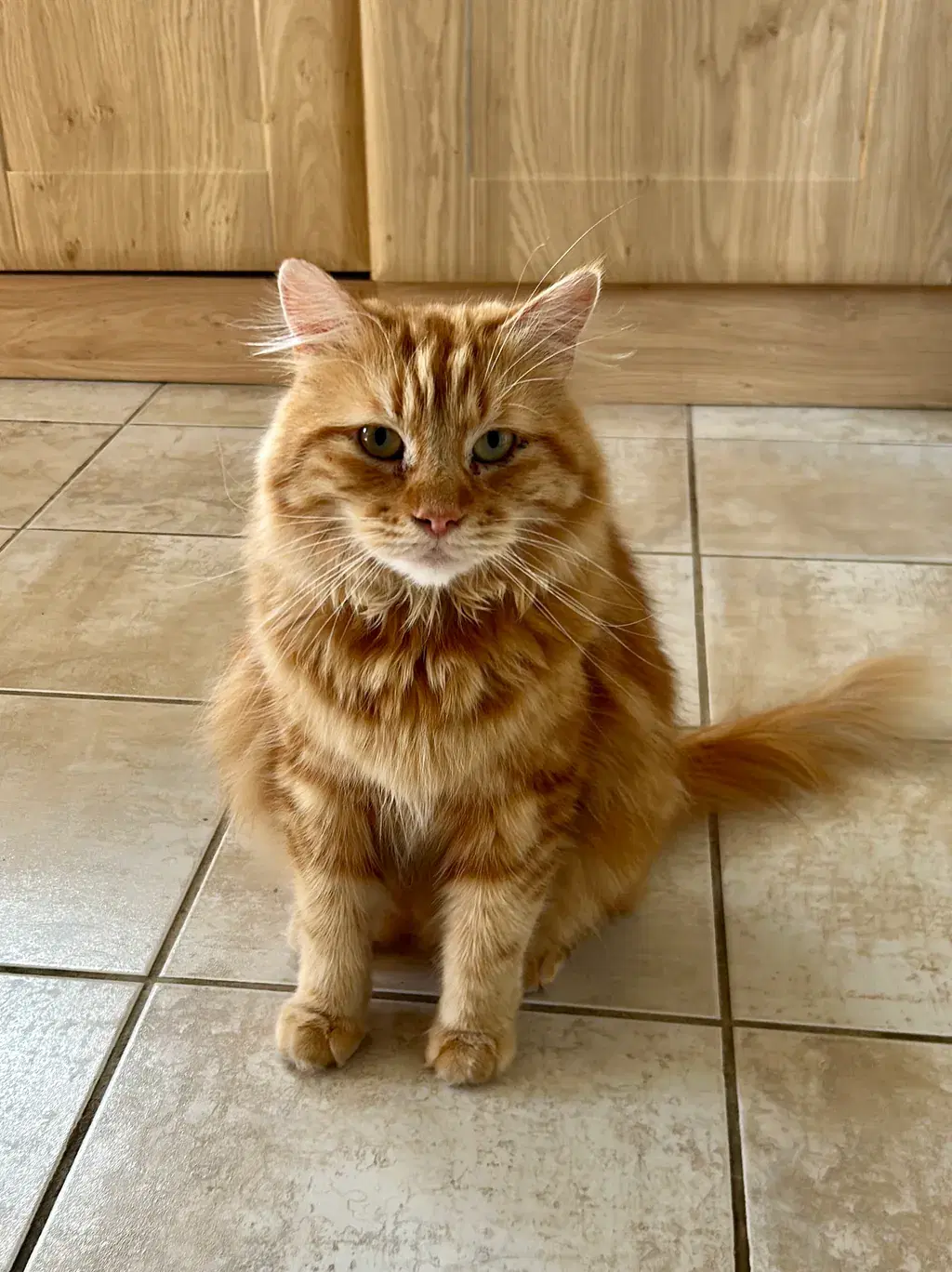
It’s a remarkable arrangement. He sees me, he expects food. I see him, I feel compelled to provide it. I’m not entirely sure which of us has trained the other. Pavlov would have had a field day. Skinner probably would too.
And recently, I’ve been wondering how much of my own behaviour has been similarly conditioned. On 1 February, I started my own business, The Lucent Collective. After years of working for other organisations, I suddenly found myself with nobody telling me what to do, when to do it, or how much of it I ought to be doing. Except, of course, nobody had really been telling me all those things before. Not to the extent I’d come to believe.
I’d become extraordinarily good at responding to expectations. Being available, taking responsibility, doing more, finding another hour in the day and saying yes because I could, rather than asking whether I should. And much of that had served me well, but I hadn’t really noticed how much of it had become automatic.
Over the last nine months, something rather interesting has happened. I’m still working hard, I’m still ambitious, and I still care enormously about doing good work and making a difference. But I’m more relaxed, more deliberate about my choices, and arguably more successful than I’ve ever been.
Not because I’ve discovered some magical secret to productivity, but because I’ve started asking myself different questions. Does this need doing? Why am I doing it? What difference will it make? And perhaps most importantly, am I choosing to do this, or am I simply responding to an expectation I’ve learned to accept?
It’s made me think about leadership rather differently. We talk a great deal about empowering people, giving them autonomy and creating environments in which they can exercise agency. But I wonder how often we stop to examine the behaviours we’ve unconsciously learned, and the expectations we reinforce in others.
How often do we mistake being responsive for being responsible, or being busy for being valuable? And how often do we confuse being conscientious with feeling obliged to do more, simply because we can?
Perhaps agency isn’t always about gaining more freedom. Perhaps sometimes it’s about recognising the freedom we already have, but have forgotten to exercise.
As for Hobbes, he’s currently sitting beside his empty bowl, staring at me. Apparently, some conditioning is harder to break than others.